Thursday, November 17, 2016

Chapter 9: Motivation of Photojournalists

The Free Dictionary defines motivation as something that motivates; an inducement, reason or goal. Whether we realize it or not, everything we do in life is related back to something that motivates us to do so. Photographers and photojournalists each have a different motivation, a different reason that they wake up everyday and continue to do the work that they do every day. Thankfully they have these motivations because I cannot imagine a world with the photos these photojournalists have produced and continue to produce.

Image by Katherine October Matthews

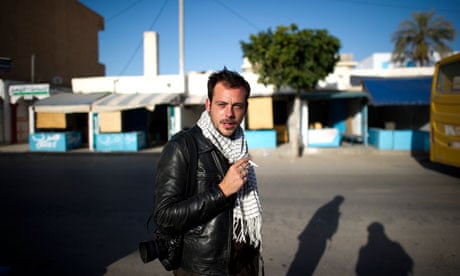
Christopher Anderson grew up in Texas but was originally born in Canada. Chris is a member of Magnum Photos and currently resides in New York. His first recognized photography was in 1999, when photos were released of the ship he was aboard that sunk in the Caribbean. Lou Noble interviewed Christopher Anderson and asked him about his career as a photojournalist. Noble asked Anderson what he looks for in a photograph, his was response was, "I’m still looking for the same heart of the photograph, something that is about an experience and an emotion." Noble also asked Anderson why he does what he does, Anderson replied, "So I want to be committed to truth, which has something to do with honesty. And that often gets confused, and sort of the documentary photojournalistic world press view of what photography is." Throughout the career of Christopher Anderson he has captured so many photos of so many different genres it is hard to categorize his work. This is similar to the works of Xyza Cruz Bacani, described by Aaron Tam as, "her images of everything from trips to the supermarket to scenes of abuse at a refuge for domestic workers earning laudatory spreads in international media and at exhibitions."
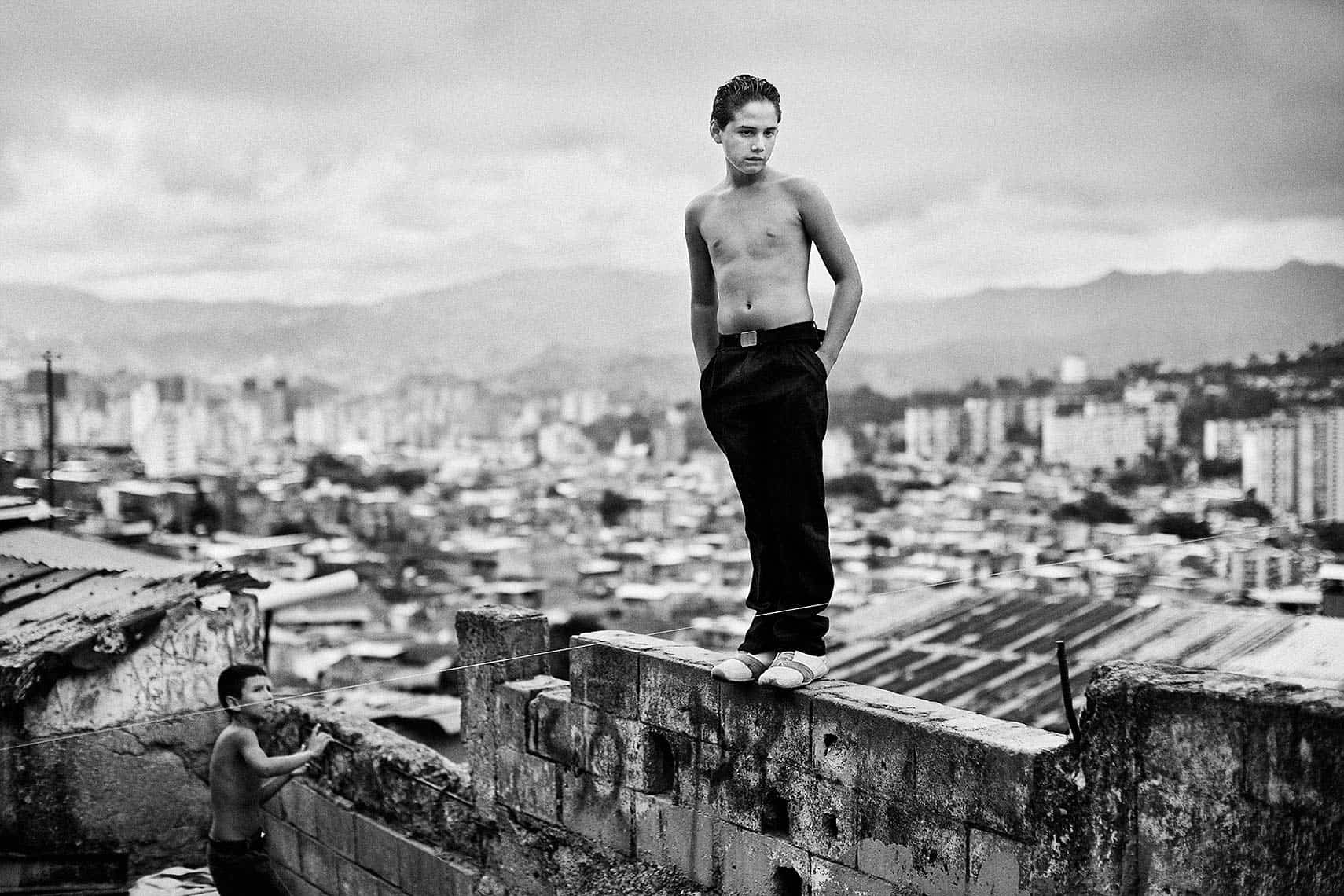
Image by Christopher Anderson

Image by National Geographic

Lynn Johnson's interest in photography began when she stumbled upon a photography book in the library during her high school years. She immediately fell in love and began taking pictures for her high school yearbook. Johnson was the first woman photographer hired to the Pittsburg Press. Johnson comments on her career as a photographer by saying, "For me, photography has been a mission. I don't mean on the grand scale, but in the sense of the daily awareness that each one of us is responsible for the wider community, that your sense of self and sense of responsibility outside yourself is as wide as you can embrace. It's a commitment to try to fulfill that responsibility by doing work about things that matter." One of Lynn Johnson's main motivations is being a female in the male dominated world of photography. Johnson describes a sense of responsibility she feels when capturing photographs when she says, “documenting womens issues feels like a responsibility as a woman photographer”.
Image by Lynn Johnson

Image by Yolan Valat

Remi Ochlik was a photojournalist that covered war stories. Remi was an award winning French photojournalist that passed away in 2012 while covering a story in Syria. Remi always knew he wanted to be a war photographer. There was never a point in his life where he was interested in covering any other type of story. Why war? Remi compared war to drugs in one interview, "War is worse than drugs. One moment it’s a bad trip, a nightmare. But the next moment, as soon as the immediate danger has passed, there is an overpowering desire to go back for more." His motivation to go back into the crossfire of war was the desire he felt. He infers that he was addicted to the lifestyle of war photography. Not only did Remi stories of war, he ultimately became part of the stories as well. This is similar to what "As a combat photographer, I was a photographer to document them, but you know, inherently I became part of the story too. So I tried to kind of show or convey my emotions through my pictures too through use of light or shadows or any sort of emotion I could." Ultimately Remi's motivation was to go out and get more. He needed to fill the void that the desire left within him. 
Image by Remi Ochlik

What motivates me?
Image by Courtney Patridge

The motivations of the photojournalists I researched and the motivations I see within myself are very different. The only photojournalist I saw a connect with was Christopher Anderson when he had mentioned "expanding his tool belt" when referring too trying different techniques and using different environments. I am always interested and open to expanding my knowledge when it comes to my education within the nursing field. You cannot continue to grow within your profession if you are not open to learning knew and improved methods. I cannot connect with Lynn Johnson as I am not a woman in a male dominated field. If anything I am a female within a female dominating field. Lastly, the motivation of Remi Ochlik, the desire and crave to go out and photograph war, I feel sometimes when it comes to helping patients and their families that I really connect with. Overall everyone in this world, no matter what profession, have things that motivate them. It does not matter what those motivators are, as long as they are there people will continue working because of them. 


Sunday, November 13, 2016

Chapter 8: Biases

Image by Ed Clark
Within this image I see people mourning. I see a young man dressed in what appears to be a uniform, playing an instrument with tears running down his face. If I were to summarize this image, I would think that this is the funeral service for a young man lost on the battlefield. The man pictured playing the instrument likely worked closely next to him day in and day out. The title given to the image also gives a sense of what is going on. The title "Going Home" could mean that people are being welcomed home or that someone has gone home to the Lord.  Everyone has different things going on within their lives or have had different things happen to them in the past. Shahidul Alam, an activist and picture journalists explains, "There is an implicit assumption there is only one truth, that there is only one way of looking at things. A story has many truths at many levels."  For this reason everyone will interpret this image slightly or drastically different. I think I picture the image this way because the military plays a relevant roll in my life, and loosing someone on the battlefield is a fear of mine.

I believe in this photo the main subjects expression says it all. The young man is clearly grieving, for what reason, I do not know. He is looking up in such a manner that it makes me think he is hoping to see something or hear from someone. It is observable that he is trying to stay strong during a very upsetting time. The image is in black and white which I think adds a level of emotion. If the image was in color there would be some brightness from the trees in the back and smalls spots of sky that would add life to the photo. The photographer had a choice to capture the image in color or black white and I have to say he made the right choice. Lastly the folks in the background add an idea of what is going on within the image. There is a woman that is right next to the young man in the lower portion of the photo who appears to be wiping her eyes. That gives a hint that this image is capturing a group of people mourning over something or someone. I would say the people picture within the background complete the picture, there would be an aspect missing without them.

Image by Saul Leob
How do I know this image is the truth? I can tell this image is the truth because I have read numerous articles and listened to endless news stations regarding the most recent election. It has been analyzed and picked apart as to how Donald Trump has become to newest President of the United States and it will continue to be throughout his presidency I am sure. So back to how I know this image is the truth. Authority has presented information and written articles confirming that he has indeed won the election and has given his victory speech. An article found on Watching American, written by Laurent Joffrin and translated by Katherine Rotter, comments on the most recent election by saying, "An entire chapter of American history has been denied today...The Clinton era too, as both of Bill's terms are remembered as a sort of Golden Age."  Another way I know this image is the truth is because I spent the evening of November 8th watching ABC as the polls closed and the states projected their winners. I watched as each candidate received their respective votes from the states that they won. Once Donald Trump took a pretty big lead, my sense perception kicked in and I felt in my gut that I knew the results from the 2016 election. I feel as though politics is a very good example of where biases can come into play. What are biases? As presented in Module 11 content, the Free Dictionary defines a bias as a preference or an inclination, especially one that inhibits impartial judgment. In no way am I disclosing my political preferences, that is not the point of this paragraph. 

The composition of this image is very simple. The image shows Donald Trump with his fist up in victory. There is only one object within the field of the image which to me makes the image very simple. Anything else included within the frame would have cluttered the image and taken away from the raw emotion portrayed. The lighting within the image adds a component that I cannot seem to put my finger on. The color the lighting puts onto the subject makes it seem as though he is glowing. The light makes the image engaging and surprising. It is unlike the usual flat demeanor of the topic of politics. Lastly, the subject of this photo is clearly the main subject. Donald Trump is the only thing taking up space within the image and he takes up about 2/3 of the frame. There is nothing else within the frame that could be considered a subject never mind the main subject. The image is not overly crowded. If the main subject were to be any smaller it would get lost within the darkness of the plain background.


Image by Mary Ellen Mark

How do I know this image is not truth? I can tell that this image is not the truth through logic and reasoning. I highly doubt that there were ever be a child, holding a stuffed animal, standing near a wall with the word "DOPE" scratched into the pain smoking a cigarette or something else. Just the fact that the child is standing next to a wall where the word "DOPE" is makes me think the photo is staged. That brings up a question in my mind. If an image is staged, is it really photojournalism?  I would think not because it does not display the truth. As Donald Weber questions,"At what point did the act of making images subvert the idea of what Photojournalism is and should be?" Just because a picture was taken by a photographer does not mean that it is a photojournalistic image. The truth of this image may not be set in stone but I can draw a conclusion based on my reasonings and logic. This image, I believe, relates to the article about Yellow Journalism. As W. Joseph Campbell writes, "They were ambitious and controversial figures, and their foes recognized they were vulnerable to personal attack by impugning their journalism." I believe the image above by Mary Ellen Mark presents controversy. The controversy can come from two directions, the photographer not putting a stop to this child's supposed actions and how did the child end up this way. Another way I know this image is not the truth because of the emotion and intuition I have when observing this image. With the drug problem so relevant in today's world, it is sad to even look at this image. I know in my heart that someone would not observe a child holding a stuffed animal smoke a cigarette or whatever it is.

The shadows of this image are very dark and brings me to think that this child is at a dark place within her life. There is a shadow casted on the child's face not allowing me to picture her whole face. I think this leads to my thought process that the actions the child is portraying is not his or her true self. The image is deep. It appears as though the side walk continues far past where the child is standing. The depth also shows very little people, therefore is this child alone standing there or does she feel alone all the time? The depth of this picture imposes questions on my mind. Lastly this image displays a great deal of abstraction. Many emotions rise from the faultiness of the image. The image was taken long ago so I do not think it is representational today but I do think this image fits into the opioid epidemic going on today. Even though the image is not directly representational of today's happenings, is certainly relates. 

Monday, October 31, 2016

Chapter 7- Ethics

A specific photo that resulted in heated reactions was one from Kevin Carter. The photograph was of a vulture and a young girl from Sudan. Carter had made a trip to Sudan in March of 1993. Carter stumbled upon a young girl that was taking a rest during her struggle of a walk to a United Nations feeding center where a vulture had landed near the young girl as well. Carter was cautious not to make too much noise because he did not want to disturb the bird. Carter waited a little while in hopes that the vulture would reposition itself close enough to the girl so that he could capture an image. Once the bird moved within the range of the image frame, Carter captured his photograph and then chased the bird away. At that point Carter was probably not yet aware that he had shot one of the most controversial photographs in the history of photojournalism.

The story of the young girl was that her parents were busy collecting food from the food center and had left their children alone only for a brief moment.  That brief moment was enough time for Carter to capture an image that would never be forgotten. Soon after the photo was sold to the New York Times where is was published for the first time on March 26, 1993. People were in an uproar. Hundreds of people contacted the newspaper out of concern for the child. People were concerned for the child's well being and if that young girl had survived or not. The other big question was why did Carter photograph her but not help her. This is a common conflict among photojournalists. They are stuck between acting as a dispassionate observer or a good samaritan.  People described Carter as being a predator and just another vulture on the scene. In Carter's defense, he was working in a time where photojournalists were instructed not to touch famines people in hopes to prevent the spread of disease.

After the backlash, Carter has mentioned regret of not doing anything but he does not know what he could have done to help the child. Soon the judgment became to much as described by the author of the article "The vulture and the little girl." In 1994, Kevin Carter won the Pulitzer prize for the disturbing photograph of a Sudanese child being stalked by a vulture. That same year, Kevin Carter committed suicide. He died of carbon monoxide poisoning at the age of 33. He left a suicide note that read,“I’m really, really sorry. The pain of life overrides the joy to the point that joy does not exist… I am depressed… without phone… money for rent … money for child support… money for debts… money!!!… I am haunted by the vivid memories of killings and corpses and anger and pain… of starving or wounded children, of trigger-happy madmen, often police, of killer executioners… I have gone to join Ken [recently deceased colleague Ken Oosterbroek] if I am that lucky” Ethical dilemmas are hard on both sides of the party. They send the people viewing the media into an uproar but who is on the receiving end of that? In this case, the receiving end never expected the amount of backlash his photograph resulted in.

Ethics can be described as moral values. Moral values that I base my daily life off of are honesty, integrity, kindness, trustworthy and helpfulness. I believe that the photo Carter captured was raw honesty. Is is the reality of the young Sudanese girl. In my opinion it would have been unethical for him to alter this image and sugar coat it in any way. Carter shows integrity by adhering to moral and ethical principles of visual journalists. The NPPA put in place a code of ethics for photojournalists and I believe this photo follows them. This photo I also believes makes him a trustworthy photojournalist. This photo encompasses a lot of emotion and I can image the internal struggle he must have gone through when deciding whether or not to sell the photo to a major publication. Obviously in choosing to do so, he never expected to amount of back lash he received.  I suppose the action of photographing this struggling child does not fall under the tarp of kindness and helpfulness because he did nothing to help the child. In reality, what could he have done to help the child? No amount of food that he could have given her would have cured her malnourishment or the famine of Sudan. Photojournalists of that time were also instructed not to touch any of their subjects to prevent to spread of disease. I do not believe that he took this photo to be cruel or mean. I just think that the photo covers a sensitive topic and some viewers are not as open minded as others.

Photo by: Kevin Carter 1993

Photo by: Charles Porter 1995

My Ethics Map 
Photo by: Courtney Patridge 2016

Sunday, October 30, 2016

Trials and Triumphs

Myra Albert Wiggins was born December 14, 1869. Myra oozed independence even at a very early age. She grew up in Salem Oregon. Myra explains her childhood as, "the wild, free,‘tomboy’ life of a Western Oregon small town girl.” Myra never had a specific interest in photography and says her entry into the field was purely accidental. When Myra received her first camera, women were becoming a larger part of the artistic world. Myra attended the Art Students League from 1891-1894. At the time Myra completed her schooling, photography was thought to be a scientific mechanical process that recorded information.  Myra wanted to change the way people viewed photography and photojournalism. "To counter this assumption, some photographers, including Wiggins, used the camera for aesthetic purposes by creating images intended to evoke emotional expression."

Myra continued her work as a photographer as she traveled the world. She describes some of the difficulties she experienced while traveling aboard ship. "I hurriedto my room to develop films so that I could finish by 2:30 when I have choir practice. I developed two rolls of film and was just five minutes late to practice. Then afterwards I went back and tended to the negatives which were soaking. My films did not turnout very well today; as I expected, it was too dark in the narrow streets and the focus on my new camera bothers me.” Throughout Myra's life, she continued to broaden her knowledge on art. She expanded her career into painting, both water color and oils. In 1948, Myra received the highest honors for Achievement in Art at the PEN Women of America Biennium. She passed away in her studio of a stroke in 1956 at the age of 86. She left behind a vast, creative legacy that continues to enrich our lives.
Photo by: Unknown
Year Taken: 1948
Myra Wiggins is the obvious main subject of the photograph. She takes up about two thirds of the image area. If she was any smaller, the focus on her would be lost to the camera and the bare background. 
The composition is very simple. The image consists of a photographer and her camera. The background is plain walls, which I believe is perfect for the image. Anything else in the background would take away from Myra.
The subject of the image looks very natural. She is not over posed and has a look of peace and happiness on her face. If anything, the shot looks more candid than posed. 
I chose this photograph because of how pleasant and happy Myra looks. All of the other photographs of her are from early on with photographic technology. I liked how the picture looked natural and shows her true self. 

Women have not had it easy throughout American history. It took a lot of hard work and dedication to get our country where it is today regarding the rights of women. There are still inequalities present today but considering the way things used to be, it is like night and day. Many of the inequalities present today are seen within the workforce in various professions. Professor Cordell briefly touches upon barriers that women have to overcome. "I believe that women photojournalists, along with women in many different professions have encountered barriers unlike any that their male counterparts have endured."  Women photojournalists are consistently reminded of the gender inequalities and stereotypes surrounding gender. Comments are made to women photojournalists when they are carrying a lot of equipment or even when they are documenting a sports event. People will question the strength of a female and their knowledge of the sport. A TV photographer was overheard saying, "They let you carry that big lens?", to a female photojournalist at the scene of an accident. The judgement does not always come from someone working within the same field either. Sometimes, if at a sports event, the judgement comes from a bystander. A father at a high school baseball game was overheard saying to a female photojournalist, "Are you sure you know the game well enough to keep score?". Lastly I believe the war scene is a very difficult place for a female photojournalist. When I image a war scene, I don't necessarily think of women. The first thing that comes to mind is G.I Joe. Catherine Leroy was a young photographer that threw herself right into the middle of the Vietnam war. "She arrived in Vietnam with little more than a Leica and $100 to her name. She went on to take some of the conflict’s most striking photographs." She was a woman on a mission. 

A profession today that I believe women face a lot of discrimination is within the medical field. A woman seen, in scrubs, within an inpatient office setting or a hospital setting is automatically assumed to be a nurse. Back in the day, this was very true. Men were doctors while women were nurses. This does not remain true today. There has been a significant increase over the years of the amount of female medical doctors, physician assistants and nurse practitioners. According to Megan Lemay, the first woman to receive a medical degree was over 100 years ago.  "In 1849, Elizabeth Blackwell became the first woman to receive a medical degree in the U.S." I see it first hand when I work at Baystate. Whenever a female walks into a patient's room, they are assumed to be a nurse. It can be a doctor in the patient's room or someone from occupational therapy, but in the end the patient assumes they are nurses. Lemay discusses how it can be frustrating constantly defending your profession. "I hate being called “nurse,” because I feel like it undoes the work of thousands of female physicians before me. I hate being called “nurse,” because nurses have reason to hate it, too. If you’ve ever seen a doctor struggle to administer a medication, boost a patient in a bed, or try to organize the minute-to-minute care of a hospitalized patient, you can probably understand why. I hate being called “nurse,” because it further separates me from my male colleagues. I hate being called “nurse,” because it sets up expectations for my relationship with a patient that I will not be able to fill." 
Photo by: Robbie Mcintosh
Year Taken: 2013
The background of this photograph helps to put the focus on the nurse in the photo. The people within the background are not focused enough to make you want to look at them. Ultimately, the background people exert your attention to the nurse. The background is somewhat out of focus which again helps put the focus on the nurse.
The depth of the field draws your attention to the deepest part of the photograph for a second then reverts your attention back to the main subject. The photo is deep, looking down a side street or alley. The depth gives the image more of a personality because it allows you to visualize the environment in which the image was taken. 
The texture of the photo is smooth and uniform. The pattern of the bricks on the ground gives the image a feeling of organization. It allows for the viewer to focus on the main subject rather than being distracted. 
I chose this photograph because of the compositional variations. I like how there was so much going on in the photo yet none of it was distracting. Your eyes briefly ponder through the image and resort right back to the main subject. I also liked how to depth of the photo allows for insight of the environment of the photo. 

Photo By: Robert Doisneau
Year Taken: 1950
The focus of this photo is dull. I do not find the focus of this picture very sharp. As a result of the entire picture being slightly out of focus, the image is viewed as a whole rather than just focusing on one part of it. Instead of just focusing on the doctor or just focusing on the nurses, they are viewed together.
The image is in black and white. I feel as though the black and white coloring of the photo creates a feeling of both seriousness along with serenity. It is a special moment, a mother bonding with her new born child. I feel as though color would take away from the emotions this photo creates. 
The photographer avoided placing the subject within the middle of the photo. I feel as though the subjects are spread throughout the photograph. My eyes do not focus on just one aspect of the photo, but the photo as a whole. The subjects are placed in more than just one third of the photograph. I would say the subjects take up about two thirds of the photo. 
I chose this photo because it shows the nurses and doctor working together as a team. Working in healthcare, it truly is a rarity to see a moment like this. Healthcare has become so task oriented rather than patient oriented and this photo reminds me of what healthcare should really be like.

Saturday, October 22, 2016

Technological Timeline

I have embedded my technological timeline in the form of a power point presentation with audio. I started in the year 1870, traveled throughout the history of photojournalism and ended in to year 2007. It is fascinating how far photography as a whole has come. If it has come this far, I am very excited to see what the future of photojournalism has in store for us. I hope you enjoy my presentation. I look forward to seeing everyones!


Saturday, October 8, 2016

Chapter 4: Working within the Digital Age

The digital age has benefitted not only photojournalism and photojournalists but every day picture takes as well. It makes the whole process easier. The taking of the picture is easier, deciding whether to keep or delete the picture is easier and uploading it to a computer or online social media site is much easier as well. Transmitting photos from a cell phone has become much easier. Not only has the process as a whole become easier, but there are many resources online to help with the process. According to WikiHow there are multiple ways to transmit photos from your phone. "There are a variety of ways to do this, from using MMS, a USB cable, a memory card, and more. Depending on your phone and your resources, certain methods may be simpler than others. In any case, you'll be enjoying all of your camera phone pictures on a much larger screen in no time at all."

Photos also do not need to be transmitted from your phone to your computer. They can be transmitted from your phone to across the world. A photo can be taken in Europe and within minutes be posted on an online newspaper in the United States. It is truly mind blowing. Another example of phenomenon is the presidential debates currently going on. Photos are taken throughout the debate and are either posted online or published in online articles before the debate has come to an end. Transmitting from cell phones and laptops has increased the speed in which news is covered. Michael Zhang briefly mentions this topic and how this process was not always this quick in an article posted online. "In our world of digital photography and high speed Internet, photojournalists can quickly and easily send large numbers of high-res photos to the other side of the globe. Things weren’t always so convenient."

Photojournalists have even began using popular social media outlets to get their photos out there faster. Social media outlets that are very popular among young people and high school students. Time
Magazine's director of photography is a prime example of this. She used a popular cell phone app, Instagram, to get photos of Hurricane Sandy out to the public. Some may think this is frowned upon using an unprofessional portal to display such a horrific tragedy. When Kim was asked why she chose this method she responded, "We just thought this is going to be the fastest way we can cover this and it’s the most direct route." Taking a good, meaningful photo, for a photojournalist is like winning the lottery. Taking an awesome photo, being able to immediately have it posted and viewed by millions of people is like hitting the jackpot. Marie McGregory quotes a female photojournalist's feelings about taking a good photograph. "When I shoot a good photo, that's a beautiful day."


Transmission of photos from cell phones and computers is barely even comparable to the color film I wrote about in a previous post. Color film had 24 to 36 exposures and the film could not be developed until all exposures had been used. After the exposures had been used, the film had to be processed and developed. If a photo wanted to be sent somewhere after it was developed, it would have had to been scanned into a computer or it was not possible. Back then, the need for photos to be sent and transmitted was not as necessary as it is now. Newspaper writers and owners were skeptical when adding photos to their papers, therefore the need to send pictures was limited. As Professor Nordell touches upon, "Even when photographs first came out, there was some controversy of whether ... some newspaper owners felt like my paper's not solid anymore, I'm using photographs."

A cellphone fits in a purse or a pocket. A laptop can fit into a backpack or a tote bag. The transmitters from back in the day were back breaking and would not fit into a small vehicle. Having that much equipment again made the process longer. All of the equipment had to be set up, turned on, made sure it was function properly before being used and then packed back up. Chris Wilkins describes what was needed of a photojournalists back in the day. "However, one of the most important job requirements 16 years ago was a strong back. The ability to lift and travel with case after case of equipment, often weighing around 80 pounds each, was a necessity. Thanks to changing technology, those days are a distant memory for veteran wire service shooters." These days all we have to do is make sure our phone or laptop is charged, turned on and we are all set to go. We don't have to carry around eighty plus pounds of equipment. The average cell phone weighs less than a pound while the average laptop these days weighs less than five pounds.

The photo below is of a old wireless, spark, photo transmitter.
Photo by George Dodwell
Year Taken: Unknown
 
The photo below shows a cell phone taking a video that was then transmitted to an online resource.
Photo by Charlie Neibergall
Photo Taken: 2015


Friday, September 30, 2016

Chapter 3: The Art of Photojournalism

Photo by Samueal Bourne
Year Created: 1880
This image uses great depth. My eyes are drawn, through the beautiful architecture, to the doorway at the very end. As a result of depth, my eyes have to look all the way through the image in order to see the end point. It allows me to view the entire image.
The details of the architecture gives this image great texture. The different levels of the sculpting are viewable allowing for the eye to see what is pointed, rounded and smooth. The smoothness of the building brings a peaceful feeling to the table.
This image is very simple and far from cluttered. There is a great deal of free space in the image but the openness of it is just perfect. The simplicity and lack of distractions makes for a calm looking photo.
I chose this photo because of the calming effect it brought upon me. The openness of the photo almost allows me to put myself there. Also the various aspects of architecture are just beautiful and I found that very appealing to the eye.


Photo by Samuel H. Gottscho
Year Created: 1930's
I believe the background of this photo is what makes this photo so compelling. The background is out of focus but clear enough that you get the city effect. Without the skyscrapers in the background, it would be very difficult to identify where this photo was taken. The background allows for identification.
The image is very busy and some aspects of it are out of focus. This allows for the viewer to focus on certain points more than others. The points that are out of focus are easily identifiable, as they are famous landmarks in New York City, so they do not need to be crystal clear. The way to photographer focused to picture allows for focus on the more overlooked aspects of the city.
The photo's main subject, taking up about 2/3 of the image,  through my eyes are the skyscrapers within the background. If the photo was just the skyscrapers then you would have a photo of just the skyline of New York City, which is very commonly photographed. This adds a little extra of what else is in the city besides the big buildings.
I chose this photo for a couple of reasons. One, because I enjoy black and white photography. Secondly because many photos of the city are taken at night with all of the buildings lit up so I thought this was a different way of looking at the city.


Photo by Robert Frank
Year Created: 1958
The lighting in this photo is very dark and dramatic. The lighting creates a dark image and a sense of doom. The lighting also makes you wonder if something is about to go wrong.
The shadow created also creates a feeling of uneasiness. You can see the shadow of the body crossing the road in between the narrow opening between the two vehicles. Again like the lighting, the placement of the shadow makes me wonder if the person is in danger and if something is about to go wrong.
The contrast of this image is very low contrast. There is not much difference between the lightest and the darkest color. The darkness of the photo contributes to the uneasy feeling of the photo. The contract gives me a feeling of impending doom while viewing it.
I chose this photo because of the contrast and shadows. I liked the way the shadows created feelings and made me wonder what was really happening. Also the blurriness of the body made me wonder if he was moving quickly or just strolling through the street.